
- 051 661 063
- Share
- prev
- next
Description
Nauportus, Oberlaibah, Vernich, Wurcnik, Zgornja (Upper) Ljubljana... and finally Vrh-nika. Would you like to know the origin of these names?
The Roman era
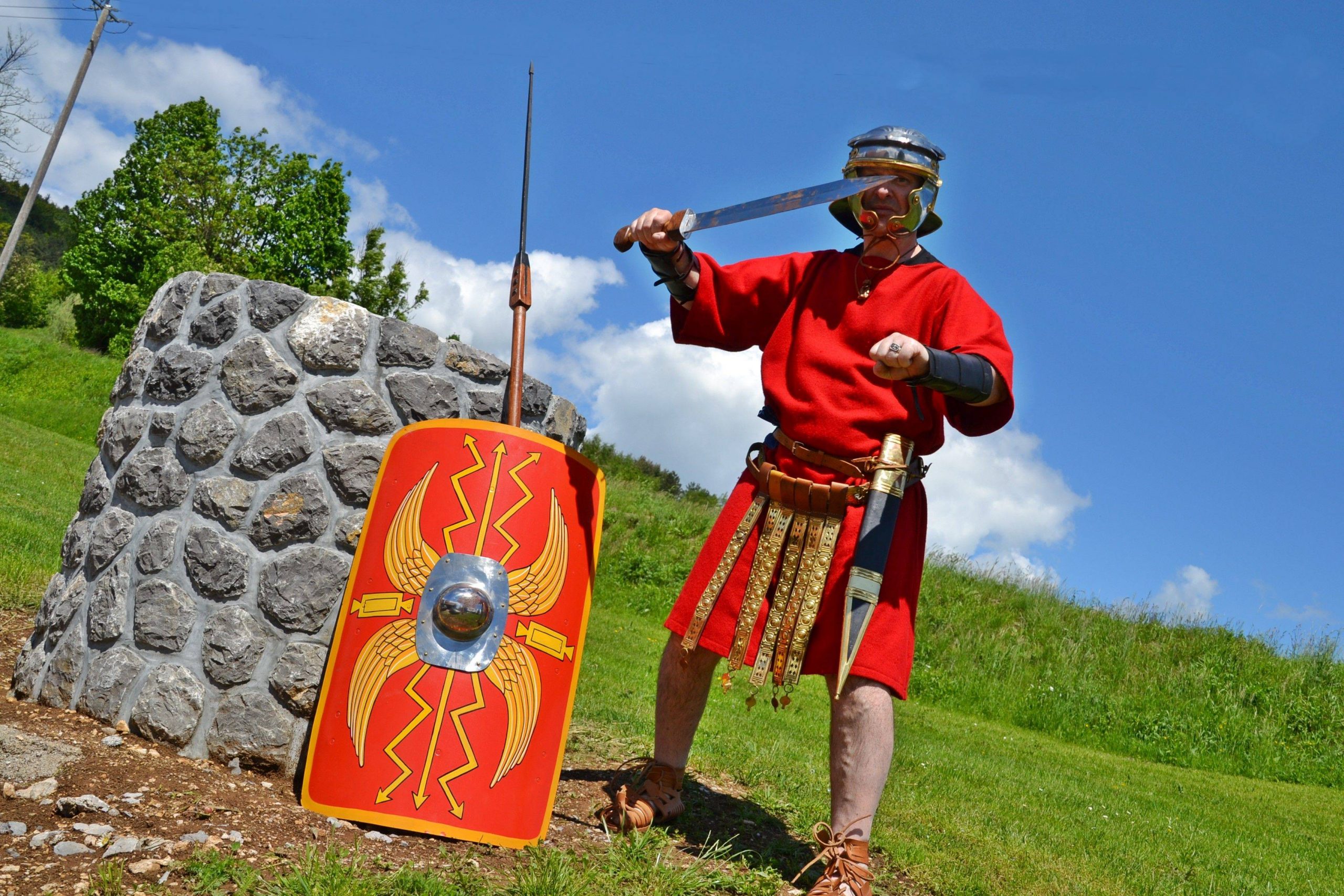
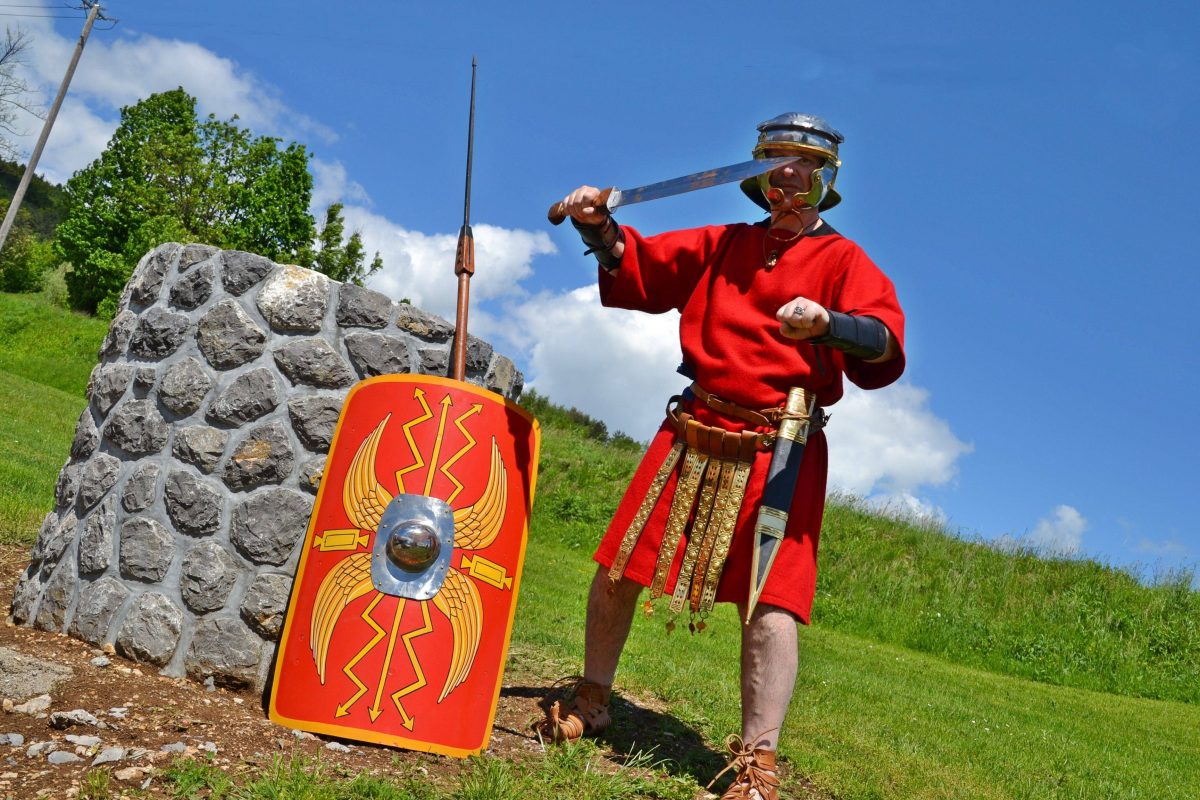
According to Strabo (Greek writer), in the middle of the 2nd century BC there was a settlement called Nauportus (Latin; 'river port for trading ships’) in the wider area of Vrhnika. The settlement was under the rule of the Celtic tribe Taurisci and served as a stop on the freight route Aquileia-Emona. Records indicate that during the 1st century BC a Roman part of the settlement emerged in the immediate neighborhood.
The settlement experienced the largest boom during the conquests of Emperor Augustus, who wished to connect karstic and apline landscapes and the Danube with Italy both in military and economic sense. He ordered construction of a road from Aquileia across Hrušica to Vrhnika and the Roman Emona; the road was built by his military departments. Stretch of the road between the Ljubljana Basin and Karst was of the utmost importance for the Roman state. Soon Nauportus has developed into an important port and warehouse with all the associated infrastructure.
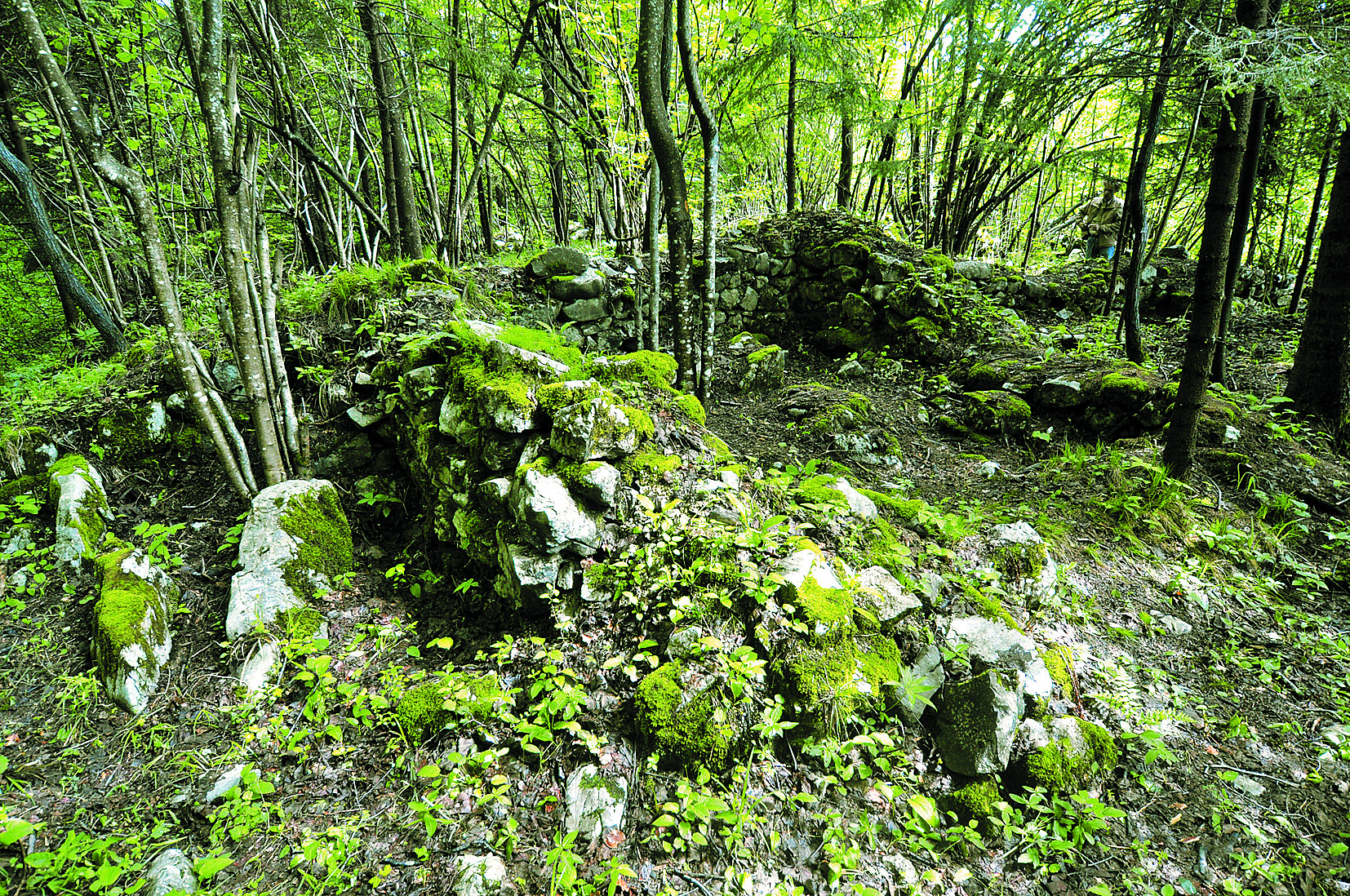
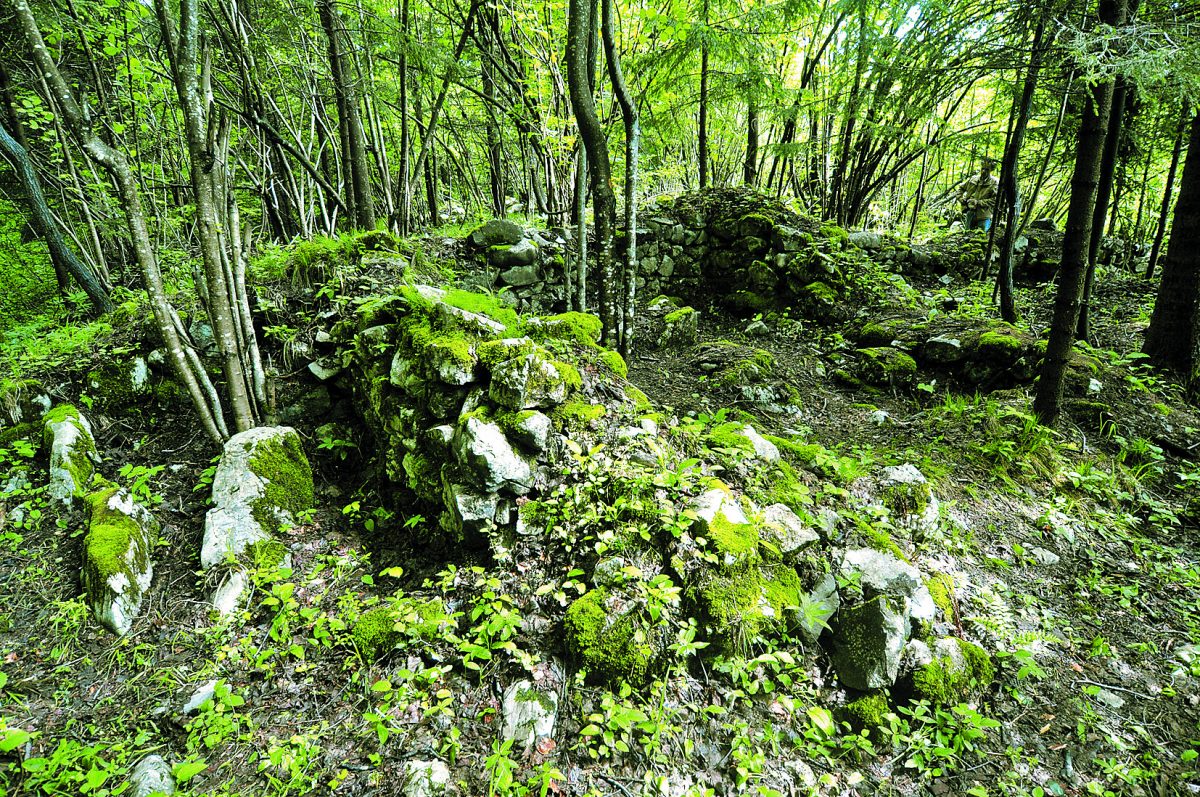
A great defensive wall called Claustra Alpium Iuliarum was the main line of defense for the area and it was built in the 3rd century AD. People also call it 'the Giants' wall' ('Ajdovski zid'). Even today we can still trace partially preserved wall - in Vrhnika it was over 10 km long, 1 m wide, and 2 to 3 m high. It had 62 quadrilateral defense towers. Remains of the Roman wall can be seen below the Ljubljana's peak, at Zaplana and at Pokojišče. At the cemetery you can observe a preserved defense tower and in the hamlet of Hill in Vrhnika remains of a 'kastel' (military base). Elsewhere, all that remained are low remnants that are overgrown by mighty spruces.
The disintegrated Roman Empire could not stand the pressure of many tribes passing through in the era of migration of peoples and so in the middle of the 5th century AD the Huns destroyed the city.
Middle ages
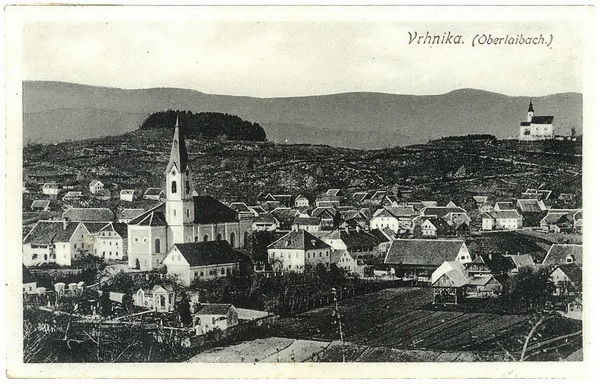
The cores of settlement in medieval Vrhnika were formed by the 12th century. We can assume that this was influenced by a slow increase in traffic on partially preserved Roman roads and waterway along the Ljubljanica.
Three core settlements emerged:
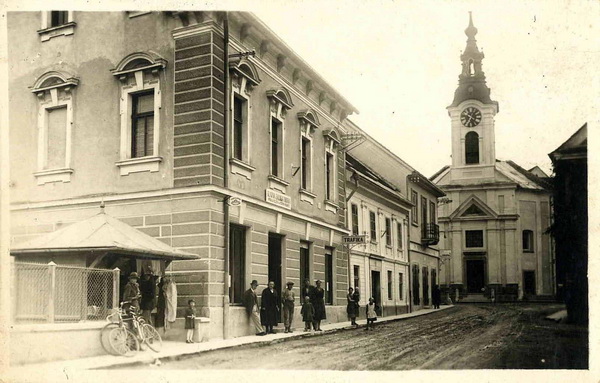
On the remains of Taurisci fort from the 4th century BC rose the Hill ('Hrib'), a settlement which included the parish church. Here settled the craftsmen, shoemakers, saddlers, and in particular tanners, who formed the most significant brotherhood of the era.
At the foot of St. Trinity hill a compact settlement of small, low and usually thatched houses was founded – the Village ('Vas'). Here lived carriers, ferrymen and other lower craftsmen.
Shops, restaurants and offices were grouped at the market area called the River bank ('Breg'). Here the rich merchants and the higher class of craftsmen settled.
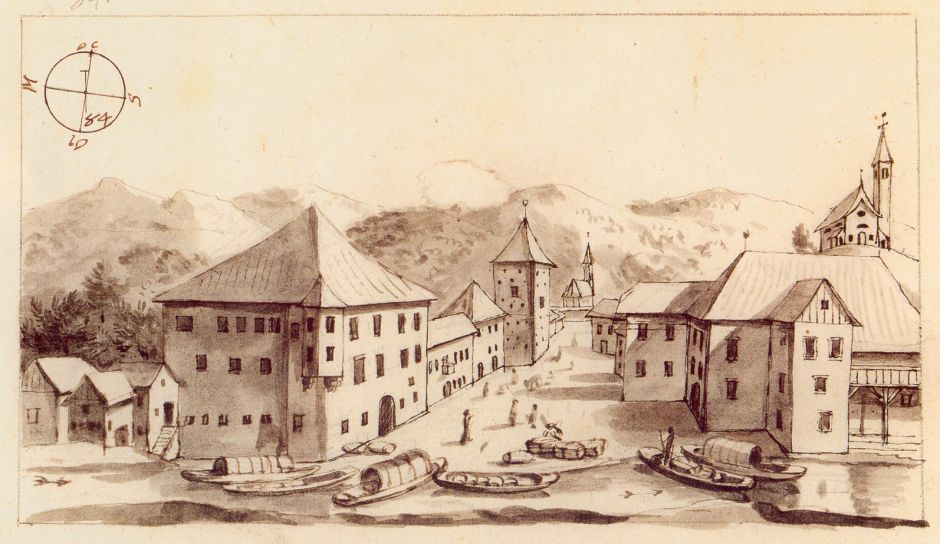
In written sources Vrhnika is first mentioned in the year of 1300 as Oberlaibach or Upper (‘Gornja’) Ljubljana. According to Valvasor, Vrhnika was a market town by 1325 and so one of the oldest markets of the former land of Carniola. Valvasor writes that the town was ruled by ‘Vrhnika’s gentlemen’.
Early and Mid Modern Period
Vrhnika experienced its golden era in the 17th century. This was a direct result of its favorable position along the main state road. All traffic from Trieste traveled to Ljubljana Basin and from here to Ljubljana via the river Ljubljanica. Visits from Austrian emperors attest to Vrhnika’s importance – in 1660 the Austrian Emperor Leopold I. visited Vrhnika, and in 1728 he was followed by the Austrian Emperor Charles VI.
Upon completion of the imperial road Vienna-Trieste in 1806, transportation by boat slowly started to die out. Transportation over long distances was gaining on popularity. Most frequently horse and cart drivers (‘furmani’) from Vrhnika rode north to Mürzzuschlag and south to Mantova. The name of Hotel Mantova at Cankar’s market is reminiscent of that era.
At that time Vrhnika experienced economic downturn, which it had slowly overcome with the help of new industries. The exploitation of large forests in the nearby karst hinterland began. Never before and afterwards there were so many sawmills alongside the powerful springs of the Ljubljanica as there were at the end of the 19th century. Additionally, the local railway Ljubljana-Vrhnika was completed in 1899 and it had also influenced the development of new industries (brick making, leather, wood, dairy industries).
In the second half of the 19th century and at the beginning of the 20th century Vrhnika was characterized by some of the most prominent Slovenian artists - writer and playwright Ivan Cankar, painters Simon Ogrin, Joseph Petkovšek and Matej Sternen.
Nowadays
After 1945, Vrhnika began to develop rapidly due to favorable traffic connections and its proximity to Ljubljana. The population increased quickly. New settlement cores started to appear and were soon merged with the old ones. In 1955 Vrhnika officially became a town.
In more recent times Vrhnika shares the fate of other Slovenian cities and the whole world. Large part of the labor-intensive industries (companies like IUV and LIKO) collapsed and was replaced by modern service industry, including tourism.
In the past few years, Vrhnika developed into one of the ‘greenest’ municipalities in the country. It is the first Slovenian Zero waste municipality and is also very proud of its title The green municipality 2011. Its landscape is also green, featuring the Ljubljana Marsh, surrounding hills, and the Ljubljanica river. The river springs in Vrhnika and characterizes the province. All of the above invites both locals and visitors to discover and explore nature and culture of this area, where the Marsh and the Karst region meet. Visitors are also attracted by numerous different events, possibilities for recreation and sports, which all ensure the welfare and health of body and mind.
Address
-
Na Klancu 8, 1360 Vrhnika, Slovenia
Region
Not Available
-
Monday
By appointment only
-
Tuesday
N/A
-
Wednesday
N/A
-
Thursday
N/A
-
Friday
N/A
-
Saturday
N/A
-
Sunday
N/A
Saturday, 13. June, 2026 11:57 local time